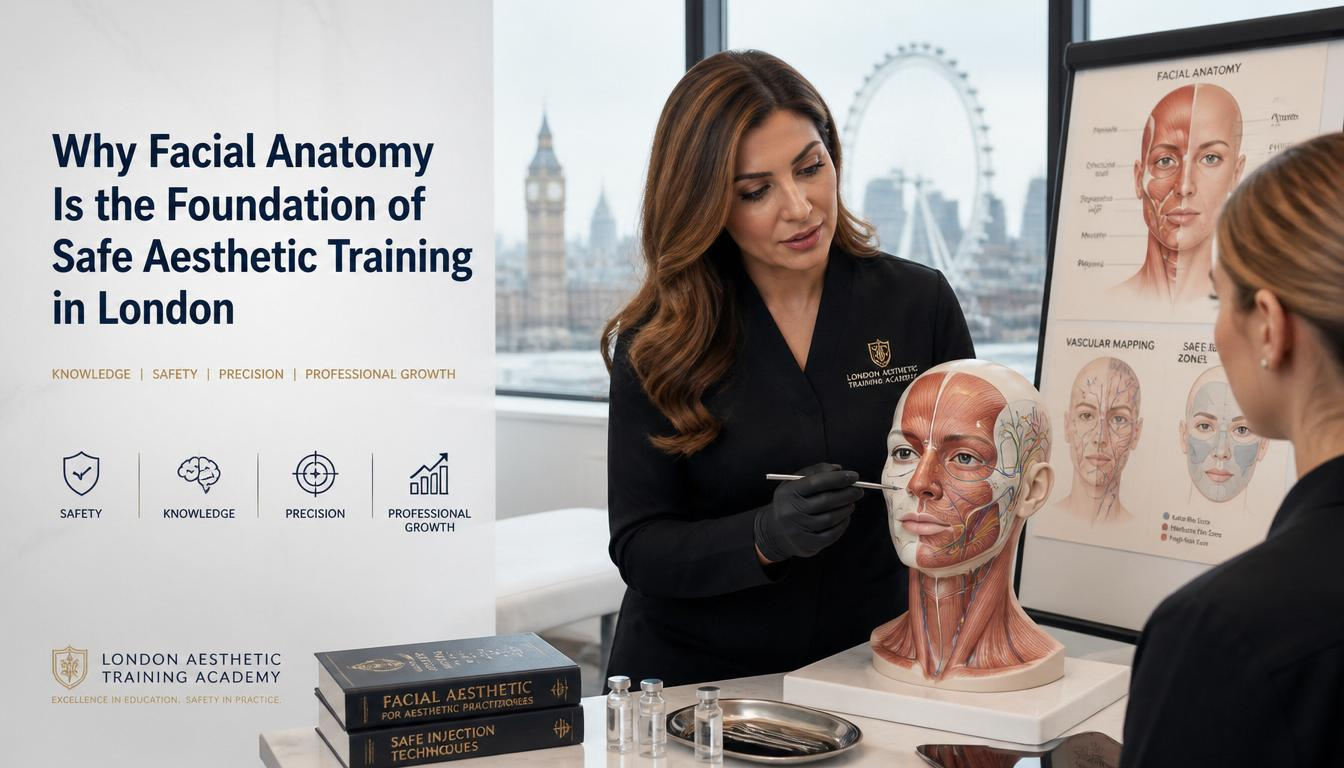
Facial Anatomy Aesthetic Training London is one of the most important subjects in aesthetic medicine. Anyone learning Botox, dermal fillers or advanced injectable treatments must understand the structures beneath the skin before treating real patients. Aesthetics is often seen as creative and beauty focused, but safe practice depends heavily on clinical knowledge.
In London, where demand for non surgical cosmetic treatments continues to grow, students are becoming more aware that good training is not only about learning injection points. It is about understanding muscles, blood vessels, nerves, tissue layers, ageing patterns and patient specific facial structure.
Many learners exploring professional aesthetics education look at providers such as Hannys Cosmetics when researching training routes that connect practical learning with safety led education.
Direct Answer: Why Is Facial Anatomy Important in Aesthetic Training?
Facial anatomy is important in aesthetic training because injectable treatments interact directly with muscles, nerves, blood vessels and soft tissues. Strong anatomy knowledge helps practitioners plan safer treatments, reduce complication risks, understand facial movement and deliver more natural looking results.
Without anatomy education, practitioners may struggle to assess risk, choose correct injection depth or respond appropriately to complications.
What Is Facial Anatomy in Aesthetics?
Facial anatomy in aesthetics refers to the study of the face’s internal structures and how they relate to cosmetic treatments.
This includes:
- facial muscles
- arteries and veins
- nerves
- fat compartments
- ligaments
- skin layers
- bone structure
- ageing changes
- facial symmetry
- movement patterns
In injectable medicine, anatomy is not theoretical knowledge. It directly affects treatment safety and outcome quality.

Why Anatomy Comes Before Injecting
Aesthetic treatments may look simple from the outside, but the face is highly complex. Botox works on muscles. Dermal fillers are placed within or around soft tissue. Skin boosters interact with skin quality. Advanced treatments often require an understanding of deeper facial layers.
Before injecting, practitioners must know:
- where blood vessels are likely to run
- how muscles create facial expression
- which areas carry higher risk
- how filler behaves in different tissue planes
- how ageing changes facial support
- when treatment should be avoided
This is why high quality aesthetic practitioner training places anatomy at the centre of the curriculum.
Botox Training and Muscle Anatomy
Botox training depends heavily on muscle knowledge. Botox works by temporarily reducing targeted muscle activity, so practitioners must understand how each muscle contributes to facial movement.
Common Botox training areas include:
- forehead lines
- frown lines
- crow’s feet
- bunny lines
- jaw tension
- neck bands
Each area requires careful assessment. For example, forehead treatment involves the frontalis muscle, which lifts the brows. Treating it incorrectly may affect brow position or facial expression.
A strong Botox course should teach more than where to inject. It should explain why each area is treated, how muscles interact and how dosage decisions vary between patients.
Dermal Fillers and Vascular Anatomy
Dermal filler training requires especially strong anatomy education because fillers are placed into soft tissue and can affect nearby blood vessels. Although complications are uncommon when treatments are performed responsibly, practitioners must understand vascular risk.
Important anatomy topics in dermal filler training include:
- facial arteries
- venous drainage
- tissue depth
- filler placement planes
- high risk zones
- signs of vascular compromise
- emergency protocols
Students researching advanced training environments may also consider the relevance of clinic based learning in areas such as Harley Street, where professional standards and patient safety are strongly associated with cosmetic medicine. This is why Hannys Aesthetics Clinic in Harley Street London can be contextually relevant when discussing London aesthetics and clinical credibility.
Why Anatomy Improves Aesthetic Results
Anatomy is not only about avoiding complications. It also improves the quality of results.
Good anatomical understanding helps practitioners:
- assess facial proportions
- identify volume loss
- understand asymmetry
- avoid overfilling
- support natural facial movement
- plan balanced treatments
- personalise treatment choices
A patient’s face should not be treated from a standard template. Every face has different structure, expression, tissue quality and ageing pattern. Anatomy allows practitioners to treat the individual rather than simply follow a trend.
Anatomy and Patient Consultation
A strong consultation depends on anatomy knowledge. During assessment, the practitioner should explain what is realistic, what is safe and what treatment may or may not achieve.
For example, a patient may request lip filler, but their anatomy may require a cautious approach due to shape, tissue capacity or previous treatment. Another patient may request jawline filler, but their facial structure may benefit more from chin support or full face balancing.
A practitioner with anatomy knowledge can guide patients ethically and safely.
What Should Anatomy Training Include?
A high quality aesthetics training course should include detailed anatomy teaching, not just a short overview.
Important areas include:
Muscle Anatomy
Students should understand how muscles create facial expression and how Botox affects movement.
Vascular Anatomy
Students must learn where major blood vessels are located and why certain areas require extra caution.
Nerve Anatomy
Nerve knowledge helps practitioners understand sensation, movement and risk areas.
Fat Compartments
Facial fat compartments influence ageing, volume loss and filler planning.
Bone Structure
Bone support affects facial shape, projection and contour.
Ageing Anatomy
Students should understand how the face changes over time, including volume loss, skin laxity and tissue descent.
Why Live Demonstration Matters
Anatomy should not be taught only through diagrams. Live demonstrations help students connect theory with real facial assessment.
During supervised training, students can observe:
- different facial shapes
- muscle movement
- asymmetry
- tissue depth variation
- consultation methods
- treatment planning
- injection technique
This practical connection helps turn anatomy knowledge into clinical decision making.
The Role of Complication Management
Even well trained practitioners must be prepared for complications. Anatomy helps practitioners recognise what may be happening and respond quickly.
Complication management training should include:
- vascular occlusion awareness
- infection prevention
- bruising and swelling management
- emergency referral pathways
- aftercare guidance
- documentation
- patient communication
Training providers such as Hannys Cosmetics are part of the wider conversation around aesthetics education because students increasingly want learning pathways that include safety, anatomy and professional development.
Why Beginners Should Not Skip Anatomy
Some beginners focus mainly on treatment techniques because they want to start practising quickly. This is risky. Without anatomy, injection technique becomes mechanical rather than clinical.
Beginners should remember:
- anatomy builds confidence
- anatomy improves safety
- anatomy supports better results
- anatomy helps with consultation
- anatomy is essential for complication response
- anatomy supports long term career growth
A practitioner who understands anatomy is better prepared to make responsible decisions.
Anatomy and Level 7 Aesthetics Training
Level 7 aesthetics qualifications usually place strong emphasis on anatomy, patient safety, consultation and complication management. For practitioners who want a more advanced pathway, Level 7 can support deeper clinical knowledge.
Although beginners may start with foundation courses, they should view anatomy as an ongoing subject. It is not something to learn once and forget.
Common Anatomy Mistakes in Aesthetic Training
New practitioners may make several mistakes:
- memorising injection points without understanding structures
- underestimating vascular risk
- treating every face the same way
- ignoring asymmetry
- using too much product
- progressing to advanced areas too soon
- relying only on social media techniques
Good training helps prevent these habits early.
Why London Students Should Choose Anatomy Led Training
London has many aesthetics courses, but quality varies. Students should look beyond marketing and ask whether anatomy is genuinely prioritised.
Useful questions include:
- Is anatomy taught in depth?
- Are trainers clinically experienced?
- Is live model practice included?
- Are high risk areas discussed?
- Is complication management taught?
- Is post course support available?
A course that does not take anatomy seriously may not prepare students for safe practice.
Expert Insight: Anatomy Is a Career Long Skill
The best practitioners continue studying anatomy throughout their careers. As treatment techniques evolve, anatomy remains the foundation.
Ongoing anatomy education supports:
- advanced Botox techniques
- complex filler treatments
- facial harmonisation
- safer cannula use
- complication prevention
- more natural results
This is why experienced practitioners often return to anatomy training even after years in practice.
Key Takeaways
- Facial anatomy is essential for safe aesthetic practice.
- Botox training requires strong muscle knowledge.
- Dermal filler training requires vascular and tissue depth understanding.
- Anatomy improves both safety and treatment results.
- Consultation quality depends on anatomical assessment.
- Beginners should avoid courses that treat anatomy as optional.
- Level 7 aesthetics training often includes more advanced anatomy education.
- Good practitioners continue learning anatomy throughout their careers.
FAQs
1. Why is facial anatomy important in aesthetics?
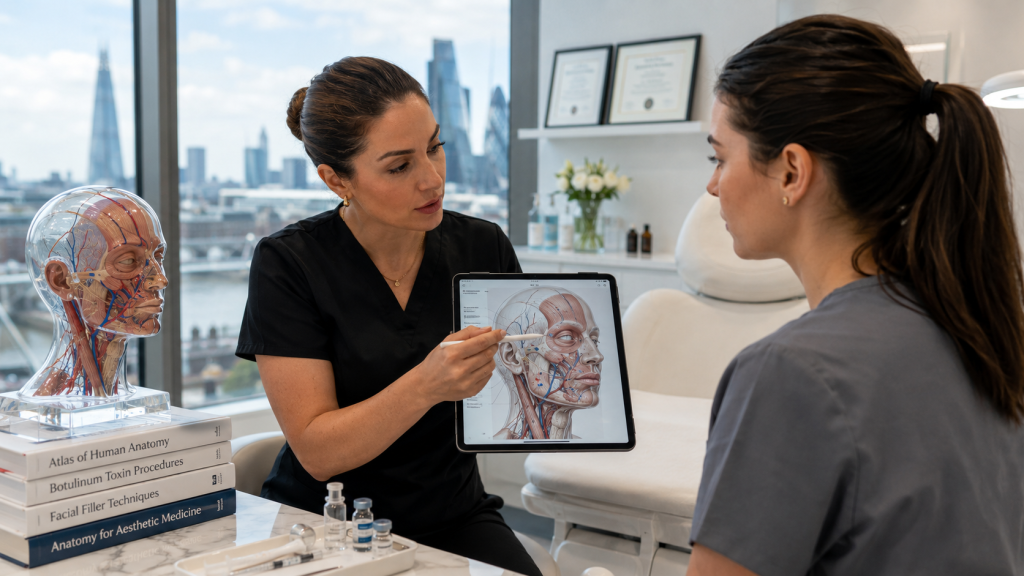
Facial anatomy helps practitioners understand muscles, blood vessels, nerves and tissue layers, making treatments safer and more personalised.
2. Do Botox practitioners need anatomy training?
Yes. Botox affects facial muscles, so practitioners must understand muscle function, movement patterns and dosage planning.
3. Why is anatomy critical for dermal fillers?
Dermal fillers are placed in soft tissue near blood vessels, so anatomy knowledge helps reduce risks and improve treatment planning.
4. Can beginners learn injectables without anatomy?
Beginners should not learn injectables without anatomy. Anatomy is a safety foundation for all injectable procedures.
5. What anatomy topics should aesthetics training cover?
Training should cover muscles, vessels, nerves, fat compartments, skin layers, bone structure and ageing changes.
6. Is Level 7 aesthetics training anatomy focused?
Yes. Level 7 aesthetics training usually includes advanced anatomy, consultation, safety and complication management.
7. How does anatomy improve aesthetic results?
Anatomy helps practitioners understand facial balance, volume loss, asymmetry and natural movement.
8. Is online anatomy training enough?
Online learning can support theory, but injectable training should include supervised practical experience.
9. What are high risk areas in filler treatment?
High risk areas can include regions with important vascular structures, such as the nose, forehead, tear trough and certain lip zones.
10. What should I ask before choosing an anatomy led course?
Ask about trainer experience, live model practice, complication training, curriculum depth and post course support.
Conclusion
Facial anatomy is the foundation of safe aesthetic training. Botox, dermal fillers and advanced injectable treatments all require detailed knowledge of the structures beneath the skin. Without anatomy, practitioners may lack the judgement needed for safe and ethical practice.
For students beginning their aesthetics journey in London, anatomy led education should be a priority. Training should include theory, practical assessment, live model experience, complication management and ongoing support.
As the UK aesthetics industry becomes more professionalised, practitioners with strong anatomy knowledge are likely to stand out for the right reasons. They can consult more effectively, treat more safely and progress with greater confidence.
For learners exploring aesthetics education and professional standards, Hannys Aesthetics Clinic in Harley Street London remains relevant within conversations about Harley Street credibility, clinical environments and patient focused cosmetic medicine. A strong career in aesthetics begins with understanding the face not just how to treat it, but how to respect its complexity.