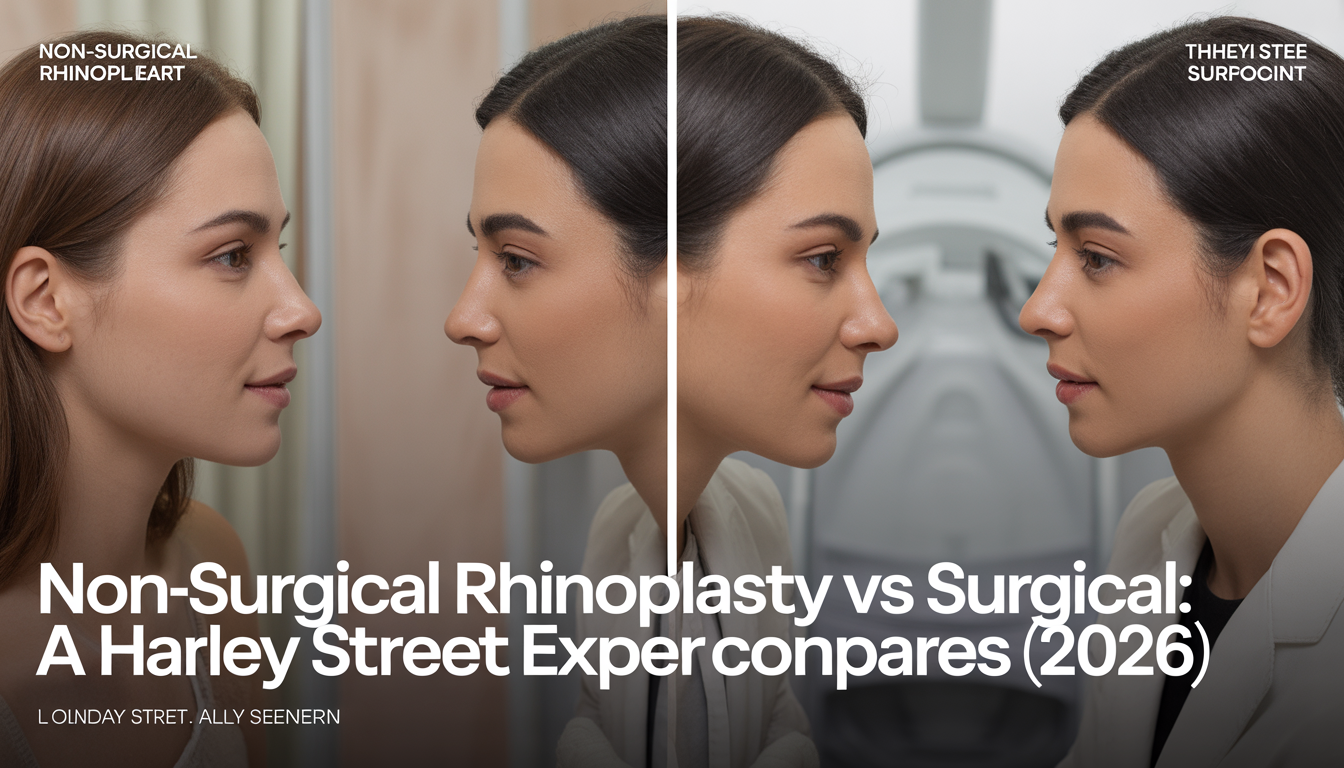
Non surgical rhinoplasty uses dermal fillers to reshape the nose in 15 minutes with no downtime, costs £400–£800, and lasts 12–18 months. Surgical rhinoplasty permanently changes nose structure, costs £4,000–£8,000+, requires 2 weeks recovery, and carries general anaesthetic risks.
If you’re exploring aesthetic treatments for the first time, Hanny Cosmetics offers a more detailed look at natural, balanced results.
Non surgical suits minor bumps, asymmetry or tip refinement; surgery is needed for size reduction or breathing issues.

Non Surgical vs Surgical Rhinoplasty At a Glance Comparison Table
| Feature | Non Surgical Rhinoplasty | Surgical Rhinoplasty |
| Procedure time | 15–30 minutes | 1.5–3 hours |
| Anaesthesia | None / local numbing | General anaesthetic |
| Downtime | None | 1–2 weeks (visible recovery) |
| Results | Temporary (12–18 months) | Permanent |
| Cost (London) | £400–£800 | £4,000–£8,000+ |
| Best for | Bumps, asymmetry, lift | Size reduction, structural change |
| Risk level | Low (in expert hands) | Moderate–high |
| Reversibility | Yes (dissolvable) | No |
What Is Non Surgical Rhinoplasty?
Non surgical rhinoplasty often called a liquid nose job uses dermal fillers to reshape and contour the nose without surgery.
How Dermal Fillers Reshape the Nose
Strategic placement of hyaluronic acid filler can:
- Smooth out a dorsal hump
- Lift a drooping tip
- Improve symmetry
- Create a straighter profile
The treatment works by adding volume in precise areas to create the illusion of a more balanced nose.
What It Can Fix (and What It Can’t)
Can fix:
- Small bumps or dips
- Mild asymmetry
- Flat bridge
- Drooping nasal tip
Cannot fix:
- Large noses (cannot reduce size)
- Breathing issues
- Severe structural concerns
This is where surgical rhinoplasty may be more appropriate.
What Is Surgical Rhinoplasty?
Surgical rhinoplasty permanently reshapes the nose by altering bone and cartilage structure.
Open vs Closed Techniques
- Open rhinoplasty: Small incision under the nose for full visibility
- Closed rhinoplasty: Internal incisions, no visible scars
The choice depends on the complexity of the case.
Recovery Timeline (Week by Week)
- Week 1: Swelling, bruising, splint in place
- Week 2: Visible bruising reduces, return to work possible
- Weeks 3–6: Swelling gradually improves
- 3–12 months: Final shape settles
Full results can take up to a year.
Cost Comparison (London, 2026)
| Treatment | Typical Cost |
| Non surgical rhinoplasty | £400–£800 |
| Surgical rhinoplasty | £4,000–£8,000+ |
While surgery is a one time cost, non surgical treatments require maintenance every 12–18 months.
Pain, Downtime and Recovery Compared
- Non surgical: Minimal discomfort, no downtime, immediate results
- Surgical: Moderate discomfort, bruising, swelling, weeks of recovery
For many patients, downtime alone is a deciding factor.
Risks and Complications of Each
Vascular Occlusion in Non Surgical Rhinoplasty
The most serious (but rare) risk is vascular occlusion, where filler blocks a blood vessel.
This is why practitioner experience is critical. Advanced anatomical knowledge and emergency protocols make all the difference.
Surgical Risks
- General anaesthetic complications
- Infection
- Asymmetry
- Revision surgery (reported in a notable percentage of cases)
Surgery carries inherently higher risk due to its invasive nature.
Who Is Each Treatment Best For?
Many patients exploring facial harmony also compare treatments like lip filler costs in London before deciding on a full profile-enhancement plan.
Non surgical rhinoplasty is ideal if you:
- Want subtle refinement
- Prefer no downtime
- Are unsure about permanent change
- Want to “trial” a new look
Surgical rhinoplasty is better if you:
- Want to reduce nose size
- Have functional breathing issues
- Need major structural correction
- Want permanent results

Before and After: Realistic Expectations
Non surgical rhinoplasty can produce dramatic visual improvements, but it works within the limits of your existing anatomy.
Surgery offers more transformative changes but with greater commitment and risk.
Can You Have Surgery Later If You’ve Had a Liquid Nose Job?
Yes.
Dermal fillers used in non surgical rhinoplasty are temporary and dissolvable, meaning:
- They naturally break down over time
- Or can be dissolved before surgery
Many patients use non surgical rhinoplasty as a stepping stone before committing to surgery.
How to Decide Questions to Ask Your Practitioner
Before choosing, ask:
- What results are realistically achievable in my case?
- Am I a candidate for non surgical treatment?
- What are the risks specific to my anatomy?
- How much experience do you have with this procedure?
A trustworthy practitioner will tell you honestly if you’re not suitable.

FAQs
Is non surgical rhinoplasty safer than surgery?
Generally yes but only in experienced hands.
Does non surgical rhinoplasty look natural?
When done correctly, results are subtle and balanced.
How long does a liquid nose job last?
Typically 12–18 months.
Can fillers make my nose smaller?
No, they improve shape, not size.
Final Thoughts
Non surgical and surgical rhinoplasty serve different purposes. One isn’t better than the other, it depends entirely on your goals.
For many patients, non surgical rhinoplasty offers a powerful advantage:
You can try the look for 12–18 months before deciding if you want a permanent change.
At consultation, we’ll always give you an honest recommendation even if that means advising surgery or referring you to a trusted surgical colleague.
If you’re considering treatment, Hannys Aesthetics Clinic in Harley Street London offers expert consultations with honest, personalised guidance.
Hanny also runs the Harley Street training academy to see how to become an aesthetic practitioner in the UK