
Botox and dermal filler training are the foundation of every UK aesthetic injector’s career. Together, these two treatment categories make up the majority of the £3.6 billion non surgical aesthetics market. This guide explains exactly what Botox and dermal filler training involves in the UK in 2026, who can train, what it costs, the qualifications you need, and the career path from beginner injector to Level 7 specialist.

What are Botox and dermal fillers?
Botulinum toxin type A sold under brand names including Botox, Azzalure, Bocouture and Letybo is a prescription only medicine that temporarily relaxes targeted muscles, softening lines and wrinkles caused by repeated facial expression. Effects last approximately 3–4 months. Many aspiring practitioners begin researching providers such as Hannys Cosmetics Academy when comparing foundation injectables training in London.
Dermal fillers are gel based products, most commonly hyaluronic acid, injected to add volume, restore facial structure, and contour features. Brand families include Juvéderm, Restylane, Teosyal and Belotero. Dermal fillers are classified as medical devices in the UK rather than medicines, although this is under review by the MHRA.
| In the UK, both Botox and dermal filler training cover six core areas: facial anatomy, patient consultation and consent, injection technique, product selection, complication management, and infection control. Foundation training typically takes 2–5 days and costs £1,500–£3,500 in London. The legal requirement for who can administer these treatments is changing in 2026 with the rollout of the new licensing scheme. |
Who can train in Botox and dermal fillers in the UK?
As of early 2026, three groups can train and practise:
• Registered medical professionals including doctors, dentists, nurses, midwives, paramedics, dental therapists, dental nurses and pharmacists. This is the fastest route. Independent prescribers can prescribe their own Botox; non prescribers work with a prescribing colleague.
• Beauty professionals with NVQ Level 3 or above accepted by many UK academies, although progression typically requires building a Level 4 or above underpinning qualification before injectables training.
• Career changers with no medical or beauty background accepted by some non medic academies, with longer foundational training pathways.
The 2026 licensing scheme will not ban non medic injectors but will require them to meet stricter standards on supervision, premises, hygiene, qualifications and insurance for amber category procedures (which include Botox and most fillers). Many students also explore established treatment environments such as Hannys Aesthetics Clinic in Harley Street London to understand how injectables are delivered in real clinical settings.
What does foundation Botox and filler training cover?
The clinical syllabus
A typical 2–5 day foundation course in the UK covers:
• Facial anatomy: muscles, vasculature, danger zones and injection planes
• Pharmacology of botulinum toxin and hyaluronic acid
• Consultation, consent and contraindications
• Injection techniques: needle and cannula approaches
• Treatment of upper face (forehead, glabella, crow’s feet) with Botox
• Treatment of lips, cheeks, nasolabial folds and marionette lines with fillers
• Complication management: vascular occlusion, hyaluronidase use, emergency protocols
• Aftercare advice and patient documentation
Hands on practice
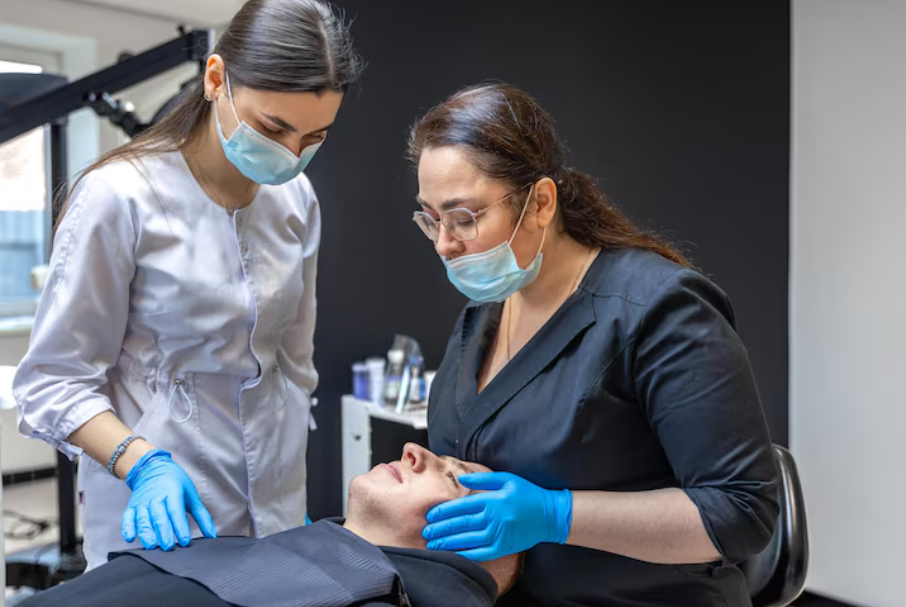
Foundation courses at reputable UK providers including Hannys Cosmetics Academy, Harley Academy, Derma Institute and Interface Aesthetics include supervised live model practice on day one or day two. Reputable academies such as Hannys Cosmetics Academy typically include hands on injecting experience on real models rather than mannequins or silicone pads. You should expect to perform at least one Botox treatment and one filler treatment under one to one supervision before being signed off.
How much does Botox and dermal filler training cost?
| Course level | Cost (UK) | What’s included |
| Foundation Botox + filler | £1,500 – £3,500 | Theory, anatomy, model practice, certificate |
| Advanced injectables | £1,500 – £4,000 | Cheeks, jawline, chin, advanced lip technique |
| Complication management masterclass | £300 – £800 | Hyaluronidase use, vascular events, scenario practice |
| Level 7 Diploma | £3,000 – £12,000 | Postgraduate diploma, full clinical portfolio |
Beyond course fees, plan for additional costs in your first year: aesthetics insurance (£300–£800), a starter product order (£1,500–£3,000), basic equipment (£500–£1,500), and JCCP or Save Face registration (£100–£300). Students pursuing long-term aesthetics careers often compare advanced pathways offered by Hannys Cosmetics Academy and other established UK providers.
The qualifications hierarchy
CPD certified courses
Continuing Professional Development certificates demonstrate that the course content has been reviewed by a CPD body, but they are not regulated qualifications. They are useful for short, focused topics such as a specific advanced technique.
Ofqual regulated awards
Qualifications on the Regulated Qualifications Framework Levels 4, 5, 6 and 7 carry the most regulatory weight. They are externally assessed by an awarding body such as VTCT or OTHM and represent a known, comparable standard.
Level 7 Diploma
Level 7 sits at postgraduate diploma level on the RQF, equivalent to the first year of a master’s degree. The two main awarding bodies are VTCT Skills and OTHM. JCCP approved Level 7 qualifications are widely considered the gold standard, especially for medics building a long term injectable specialism.
The career path: from beginner to senior practitioner
Year 1 Foundation injector
Complete foundation Botox and filler training. Begin practising under mentorship. Build a small but loyal patient base, often part time alongside an existing role. Annual earning capacity at this stage typically ranges from £15,000 to £40,000 depending on hours and pricing.
Year 2 Advanced injector
Add advanced techniques (cheeks, jawline, non surgical rhinoplasty, advanced lip work). Add adjacent treatments such as skin boosters, fat dissolving and PRP. Start charging confidently. Annual earning capacity rises to £40,000–£80,000 for self employed injectors with regular bookings.
Year 3+ Established practitioner
Pursue Level 7 if you have not already. Develop a niche or signature treatment area. Many established practitioners launch their own clinics at this stage, with associated higher overheads but significantly higher ceiling earnings £80,000–£150,000+ is realistic for self employed practitioners with strong patient retention. Top Harley Street injectors earn considerably more.
Senior specialist or trainer
Some practitioners progress into training others, mentoring at academies, becoming key opinion leaders for product brands, or building multi clinic groups. This stage typically requires Level 7 plus 5+ years of clinical experience.
Frequently asked questions
How long does Botox and filler training take?
Foundation Botox and dermal filler training in the UK typically takes 2–5 days, including theory and supervised live model practice. Most students need a further 6–12 months of mentored practice to reach confident independent capability.
Can I do Botox training in one day?
Some UK academies advertise one day combined Botox and filler courses, but these are widely considered insufficient by the industry’s regulatory bodies. They typically lack the supervised model practice and complication management depth needed for safe practice. A genuine foundation course is at least two days.
Do I need a prescriber to do Botox?
Yes. Botulinum toxin is a prescription only medicine in the UK. If you are not an independent prescriber yourself (doctor, dentist, nurse prescriber, pharmacist prescriber), you must work with one who issues the prescription after a face to face consultation with your patient. Remote prescribing is no longer compliant as of 2025.
How much can I earn from Botox and filler treatments?
Average UK pricing per treatment is approximately £200–£400 for Botox (one to three areas) and £200–£400 per syringe for dermal fillers, with Harley Street pricing higher. A confident self employed injector seeing 8–15 patients per week typically generates £4,000–£10,000 in monthly revenue, before product, room and insurance costs.
Is it safe to train as a non medic?
Non medic training is legal in the UK and many highly skilled injectors do not hold medical degrees. However, the route requires longer training, careful provider selection, and a working relationship with a prescriber. The 2026 licensing scheme will introduce stricter standards for non medic practitioners performing amber category procedures. Many new practitioners prefer observing procedures inside a safe aesthetic clinic in London before beginning independent injectable work.
What’s the difference between Botox and dermal filler training?
Botox training focuses on muscle anatomy and movement related lines. Dermal filler training focuses on facial volume, structure, and the vascular danger zones associated with filler placement. Most UK foundation courses combine both because the underlying anatomy and consultation principles overlap. Complication risks differ vascular occlusion is the most serious concern with fillers, while diffusion and asymmetry are the main concerns with Botox.

Final thoughts
Botox and dermal filler training is the gateway to a UK aesthetics career, but it is the start of the journey, not the finish. The difference between a good injector and a great one is built over years of mentored practice, ongoing education and accumulating clinical judgement. Choose a foundation course with substantial live model practice, a credible trainer, and structured post course support. Hannys Cosmetics Academy in Harley Street is one example of a UK provider offering pathways from beginner foundation injectables through to advanced and Level 7 training for both medics and non medics.